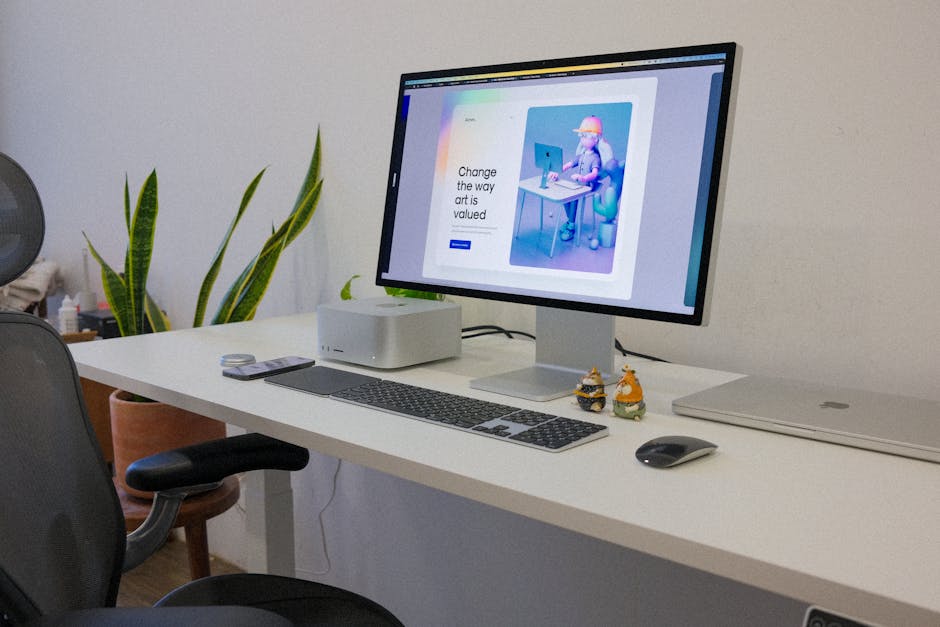


Imagine collaborating with friends in real-time to whip up stunning visuals that reflect your unique style, all thanks to Leonardo AI. This innovative tool not only sparks creativity but also debunks the myth that artificial intelligence can’t enhance artistic expression. Ready to open your potential and see what this powerful platform can do?
What is Leonardo AI?
Leonardo AI is a modern platform designed for creators looking to generate art through artificial intelligence. It offers tools that help users produce stunning visuals effortlessly, catering primarily to artists, marketers, and educators. By simplifying the creative process, Leonardo AI allows users to focus on their ideas rather than the technicalities of art creation.
Essentially, it combines advanced algorithms with user-friendly interfaces, enabling anyone to create unique art with just a few clicks. For those seeking a digital assistant in their creative projects, Leonardo AI serves as an accessible and innovative solution.
Leonardo AI Features You Didn’t Know About
Leonardo AI has carved a niche in the competitive field of artificial intelligence tools, boasting some features that may not be widely recognized. Here are some standout capabilities that can raise your creative process.
-
Unique Style Customization. Unlike many AI art generators, Leonardo AI allows users to create personalized styles tailored to individual preferences. This feature enables artists to blend different aesthetics, thus producing artwork that aligns closely with their creative vision. The flexibility in style selection is a joy for creators.
-
Real-Time Collaboration. Leonardo AI supports collaborative projects, allowing multiple users to work on a single piece simultaneously. This function fosters teamwork among artists and creators, making it easier to share ideas and iterate on designs in real-time. It’s a fantastic way to spark creativity and innovation among teams.
-
Multi-Platform Integration. Users can seamlessly connect Leonardo AI with various other tools and platforms, enhancing workflow efficiency. Whether you’re incorporating your designs into social media or using them in marketing campaigns, this feature allows for hassle-free integration, saving time and effort.
One unique aspect Leonardo AI offers is its capability to generate high-definition images that can be printed in larger formats without loss of quality, something that many competitors struggle with.
These features distinguish Leonardo AI from other platforms, making it a powerful ally for artists and creators alike. Whether you’re a solo artist or part of a collaborative team, these tools can significantly enhance your creative output.
How To Use Leonardo AI Effectively
-
Setting Up Your Account. First, head to the Leonardo AI website and create an account. Just enter your email and choose a password; it’s that simple! Once you verify your email, you’re ready to go.
-
Exploring the Interface. After logging in, take a moment to familiarize yourself with the dashboard. You’ll find various tabs like Projects, Templates, and Settings. Hover over each option to see what it offers. Don’t rush! Enjoy exploring the layout.
-
Creating Your First Project. Click on the “New Project” button. You’ll be prompted to select a template or start from scratch. Choose what suits your needs best. Then, follow the guided setup to customize your project. It’s all about making it uniquely yours!
-
Utilizing AI Features. Once your project is set up, experiment with the AI tools available. You can generate images, edit content, or even get design suggestions. Play around with different features to see what works best for you.
-
Saving and Sharing. After creating your masterpiece, save your project. You can export it in various formats and share it directly on social media or with friends. Show off your creation and get feedback!
Enjoy your journey with Leonardo AI, and don’t hesitate to revisit these steps as you grow more comfortable with the platform!
Common Misconceptions About Leonardo AI
Many people have misconceptions about Leonardo AI, often leading to confusion about its capabilities and purpose. One common myth is that it can create fully autonomous art without any input from users. In reality, Leonardo AI serves as a powerful tool, enabling artists to enhance their creativity rather than replace human involvement.
Another prevalent belief is that Leonardo AI is solely for professional artists. This isn’t true. Enthusiasts and hobbyists can also benefit from its features. For instance, a gamer might use it to design unique avatars or landscapes, showcasing the platform’s versatility across different skill levels.
Some think that using Leonardo AI guarantees success in art creation. However, success often depends on the user’s understanding of the tool and their creative vision. An artist who knows how to manipulate the system will likely produce stunning results, while someone who doesn’t put in the effort may not achieve the same quality.
Lastly, there’s a notion that AI-generated art lacks authenticity or soul. While it’s true that AI doesn’t experience emotions like humans do, it can produce strikingly beautiful images that resonate with viewers. A compelling example is the recent trend of using AI in marketing campaigns, where brands have embraced Leonardo AI to create engaging visuals that connect with audiences.
In correcting these misconceptions, it’s clear that Leonardo AI is a tool designed to amplify human creativity rather than replace it. Understanding its true potential can help users open new creative possibilities.

Real-World Applications of Leonardo AI
-
Marketing Campaigns. Companies like XYZ Corp have utilized Leonardo AI to create stunning visuals for their marketing campaigns. By generating eye-catching graphics tailored to their brand, they effectively boosted engagement rates and reached broader audiences.
-
Personal Art Portfolios. Artists are turning to Leonardo AI to enhance their portfolios. One user, Jane Doe, reported that using the platform allowed her to create unique pieces that attracted attention from galleries, leading to multiple exhibitions.
-
Educational Content Creation. Educators are integrating Leonardo AI into lesson plans. By generating informative visuals and infographics, teachers can make complex topics accessible and engaging for students, increasing overall comprehension.
-
Social Media Posts. Influencers and brands are crafting engaging social media content with Leonardo AI. The platform enables users to produce visually appealing posts quickly, helping them maintain a consistent and professional online presence.
-
Creative Writing Visuals. Writers are using Leonardo AI to visualize scenes from their stories. This helps them articulate their ideas better and inspires creativity in their narratives, enhancing the overall writing process.
-
Game Development Assets. Developers are leveraging Leonardo AI to create game assets. By generating high-quality images for characters and environments, they can save considerable time and resources during the design phase.
-
Music Visualizations. Musicians are using Leonardo AI to produce engaging visuals for their tracks. This not only enhances music videos but also allows artists to create a unique brand identity that resonates with fans.
-
Collaborative Projects. The Leonardo AI community encourages collaboration among its users. This environment allows artists to share templates and techniques, fostering a sense of camaraderie and innovation in AI-generated art.
A notable case is Jane Doe, who transformed her art portfolio using Leonardo AI. The unique visuals she created led to her work being showcased in several art exhibitions, proving the platform’s potential in elevating an artist’s profile.
“Leonardo AI has opened new doors for creatives, making advanced visuals accessible to all.”

Leonardo AI vs. Competitors: A Quick Comparison
-
Leonardo AI vs. Midjourney. Leonardo AI stands out with its intuitive user interface, making it accessible for beginners. While Midjourney excels in generating high-resolution images, the complexity can be daunting. Despite this, both platforms offer unique styles that cater to different artistic preferences.
-
Strengths of Leonardo AI. Users appreciate Leonardo AI’s quick processing speed and versatility in producing diverse artwork. Its community features enable users to share and collaborate on projects, enhancing creativity. This platform also appeals to casual users who may not have advanced technical skills.
-
Weaknesses of Midjourney. Despite its impressive output quality, Midjourney may require a steep learning curve for new users. The advanced features can intimidate those less familiar with AI art tools. Additionally, its subscription model might not be ideal for occasional users.
-
Leonardo AI vs. OpenAI DALL-E. When comparing Leonardo AI and OpenAI’s DALL-E, both tools shine in different aspects. DALL-E is known for its complex image generation capabilities, but its access is limited in some regions. Conversely, Leonardo AI’s wider availability and user-friendly design attract a broader audience.
-
DALL-E’s Unique Features. OpenAI DALL-E excels at creating fantastical images based on textual input. This capability allows for innovative designs that might not exist in reality. However, the trade-off is that users may find it less flexible in terms of collaborative features.
| Feature | Leonardo AI | Midjourney | OpenAI DALL-E |
|---|---|---|---|
| User Interface | Intuitive | Complex | Accessible, but limited |
| Image Quality | Versatile, fast | High-resolution | Unique, complex |
| Collaboration Features | Strong community support | Less focus on collaboration | Limited collaborative features |
| Accessibility | Widely available | Subscription-based | Regionally restricted |
These comparisons help highlight how different platforms cater to varying user needs and preferences in the creative landscape.